
 Program
 YouTube
 Instagram
 Facebook
The depth of uncertainty
by Jana Bohutínská
translated by Jitka Pavlišová
In early fall 2026, I’m walking along the shore of the Slapy Reservoir on the Vltava River. Tree stumps are emerging from the receding water—remnants of forests that were once cleared. Where I was swimming just a short time ago, shells are now drying on the exposed banks. The rivers are drying up, and at the bottom of the artificial lakes—whose water is being drained to feed the rivers—the flooded landscape comes into view. Not just forests. Elsewhere, there are also structures, even a cemetery. It isn’t raining. The water shortage has caused the wells to run dry. It has revealed an apocalyptic sight of rubble and history that the reservoirs had long since swallowed up. I’m sitting on a tree stump wrapped in forgotten fishing lines. I’m thinking about the necessity of facing yet another uncertainty. And then I write this text.
Uncertainty. A word that probably best describes the state of culture in the Czech Republic. And above all, the situation of the independent arts scene: in dance, theater, contemporary circus, and the performing arts in general. It also describes the situation of the small cultural magazines with which I collaborate as a freelance writer.
The current of independence
By “independent,” I mean the part of the cultural scene that operates without public funding—that is, without being supported or financed by a ministry, a regional authority, or a municipality. The independent scene relies on people who work on a freelance basis (permanent positions are practically nonexistent in this sector) and on a wide variety of organizations. It relies on project funding from multiple sources. Given the prevailing system of public funding, this financing is usually planned on an annual basis—with few exceptions—and combines public and private funds.
A freelancer in the cultural sector (officially, a self-employed person) has exactly the same obligations and rights under the Czech tax, labor, and social security systems as any other person in any other sector. For example, a hairdresser working for their own account, a freelance IT expert, or a self-employed artisan. The state takes no account of the specific nature of artistic work.
Uncertainty. It is deeply ingrained in the cultural scene. Uncertainty is an integral part of the work of all those who are professionally active in the independent cultural sector. And this has been the case ever since independent culture became legal in the Czech Republic after 1989. However, with the populist, nationalist government that came to power in December 2025—which includes a coalition partner considered to be on the far right—the situation began to deteriorate significantly once again. We are faced with the erosion of the very foundations of freedom and democracy. The uncertainty has reached a new level, a new depth.
Their priorities
After the last parliamentary elections, the Ministry of Culture fell into the hands of a right-wing protest party. With just under seven percent of the vote, it entered parliament. And then a scenario unfolded that had already “proven effective” among power-hungry autocrats in neighboring countries.
An end to cooperative communication between the Ministry of Culture and the cultural community. Labeling people in the cultural sector and fueling their vilification. Attempts to destabilize the nonprofit sector. Cuts to the culture budget. An attack on public media. Interference in funding programs. The secret drafting of a new state cultural policy in the summer of 2026. A shift in priorities (with an emphasis on cultural institutions supported by the ministry, on historical monuments, and on national tradition)—priorities that do not include independent culture. And certainly not art that is political.
The pressure to depoliticize art is growing. Art should entertain, not annoy, they say. There is even talk of a new “normalization”—reminiscent of the repressive 1970s and 1980s in Czechoslovakia following the suppression of the Prague Spring.
The measures taken by the Ministry of Culture are provoking a reaction in the art scene. Partly pragmatism, conformism, and opportunism—the desire to turn a blind eye to what is happening, to overlook the gravity of the events, and, even worse, to underestimate the power of words, thereby opening the door to something even more dangerous. Partly open letters, statements, and negotiations (which the Ministry has misused as its own alibi). Sporadic public, artistic, and civil society resistance—less than I myself had hoped for. Demonstrations that emerged from student circles, lacking the potential to become mass protests. For one part of the cultural scene, it’s about principles; for the other, as always, it’s primarily about money.
The gentle power of respectful cultural advocacy is coming up against the arrogance of the bureaucratic-political machinery. The cultural scene is failing because of politicians’ efforts to push through changes at any cost—quickly, in secret, and in defiance of those affected by them. The Ministry of Culture cannot be trusted (though let’s not forget that the very nature of governance is also part of culture). However, we must not allow ourselves to be forced to accept the logic that lying is an acceptable form of communication and that decency and refinement are a weakness. On the contrary: they are a strength. As of the time I am writing this text, however, the art scene has not yet found the will, the courage, and the necessary connections for more radical and visible public action, e.g., with humanities-oriented universities where departments are being dissolved and merged, with environmental organizations that are making serious efforts to prevent the worst destruction of the environment, and others.
Shortcomings
The prolonged uncertainty is a source of stress. It hits those who make their living in the arts and cultural sector particularly hard. Underfunding is chronic, and the professional independent cultural scene in the Czech Republic has become a master of adaptation. And it embodies resilience every day. In the nearly forty years since the political transition, it has honed its ability to take risks and, where possible, manage them to some extent. But where is the limit? How can risk be managed when, for example, as recently as early October 2026, it was still completely unclear which funding areas the Ministry of Culture would announce for 2027, what it would support, exactly how and in what amount it would allocate funds, and when it would disburse them to successful applicants? Some of the work will be done voluntarily and without pay, as always. Some will take out another bridge loan. Some will give up.
However, for decades now, a chronic shortage of human energy has been building up in the independent cultural scene. By this I mean the drive of real people to create, to organize, to do what they believe in—what they see as meaningful, what they’re passionate about, what they love, the fulfillment of their talent for others, and also their professional future. This ranges from those graduating from art schools to experienced artists. The cultural sector is losing people—they prefer to move to other sectors—and it is losing talent. And it is also driving people to the brink of disillusionment and exhaustion—and beyond that brink.
From the outside, it’s often hard to tell. The willingness to invest in oneself is enormous. The independent cultural scene in the Czech Republic remains diverse, offering its audience a wide range of artistic forms of expression; the large number of small independent actors is one of its strengths—and this is what makes it exceptional. Whether it’s the culture of the metropolises, concentrated in the major cities—above all Prague—or the smallest projects in the regions where people are most at risk of poverty and social exclusion. This diversity reveals an admirable human energy, creativity, and ingenuity that nourish independent culture. And these qualities sustain it from within, even in places where the financial and organizational conditions are dire. It is clear just how strong—but also how fragile and vulnerable—such an ecosystem is. It remains uncertain whether it will be possible to preserve such cultural diversity.
Resistance through art
This profound uncertainty, however, also poses a tremendous challenge for the independent arts and culture. It is an impetus to reexamine our very nature, to explore new visions and further possibilities for collaboration. It is a call for courage when it comes to defending something important, even at the cost of potential personal loss. When a person responds with personal commitment to what the place, the time, and the historical circumstances present to them. And yet we are still speaking only of a potential loss of money, of the willingness to engage in a conflict—possibly even in court—to expose oneself to inconvenience, to stand against the majority with one’s own stance, and to avoid falling into self-censorship. It is still a “mild” form of courage compared to what artists in many other countries face, where their lives are threatened. Parastoo Ahmadi, for example, was sentenced to 74 lashes in Iran simply for singing without a hijab.
During the socialist era, some people in the Czech Republic were able to mount courageous civil society resistance through art, intellectualism, and a longing for freedom. Back then, doing so meant being barred from higher education, getting fired, being thrown in jail, or having to live in poverty. Can we also offer lasting resistance today through art and writing, even though we no longer face threats nearly as severe? It is necessary to speak out publicly, to get involved in person and under one’s own name. To stand up for oneself, with one’s own name. Surely this is something that should be deeply ingrained in artists, creative professionals, and people in the cultural sector. However, this artistic and civic power must spread from the stages not only into the auditoriums but also out into the wider physical public space. Self-confidence, courage, and power—not powerlessness. What can we stand up for? What are we willing to give up?
Biografies
Jana Bohutínská studied theater studies and aesthetics at the Faculty of Arts of Charles University in Prague. As a freelance writer and theater and dance critic, she contributes to cultural and social magazines. She also teaches writing about dance in university courses. As an expert, she has served on funding committees and participated in research projects on dance, cultural funding, and cultural policy. She complements her professional background in the cultural sector with practical experience in coaching, entrepreneurship, and personal development.
Jitka Pavlišová is an assistant professor at the Institute of Theater and Film Studies at Palacký University Olomouc (CZ). Her research explores choreography as a space for transcultural exchange, embodied knowledge, and the reconfiguration of post-socialist identities in contemporary dance and performance in East Central Europe. She also curates the dance and performance program of the international Flora Theater Festival (Olomouc, CZ). Through her curatorial practice, she supports contemporary art outside major cities and fosters new networks between regions.
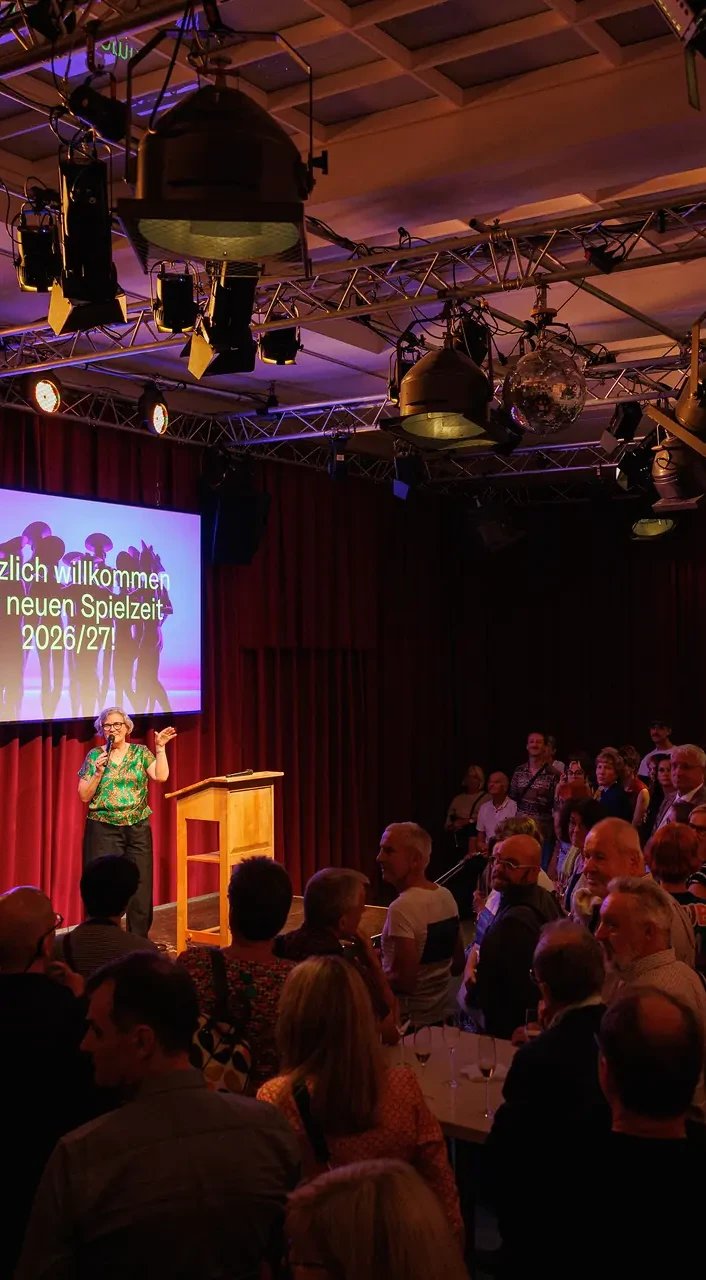 Festival opening at Nebenan/VedleFestival opening at Nebenan/VedleUnabhängige Kunst aus Tschechien29.01.2027TalkNebenan/Vedle
Nebenan/Vedle
Independent Art from the Czech Republic
28.01. – 06.02.2027
