
 Program
 YouTube
 Instagram
 Facebook


In authoritarian regimes, spaces of freedom often emerge in private settings: in Moscow kitchens or East German living rooms, where artists and dissidents discussed banned literature and built a sense of community. For many Jews, these places also became spaces for the search for a new Jewish identity. The exhibition “Jüdische Ossis” (Jewish Ossis) explores these connections through walk-through installations.
As part of the closing event on October 27, there will be a guided tour followed by a reading from the book “Mischka” by Barbara Honigmann, as well as other texts by Jewish authors from the GDR. Afterward, Sandra Anusiewicz-Baer and Marko Martin will discuss their own experiences in the GDR.
Readers: Lisa Ullrich and Nina Heithausen
Program
18:00
Guided Tour of the Exhibition “Jüdische Ossis IV”
18:30
Reading and Discussion
Actors will read excerpts from works by Jewish authors from the GDR. The focus will be on Barbara Honigmann’s portrait “Mischka.” Following the reading, Marko Martin and Sandra Anusiewicz-Baer will discuss growing up in the GDR, spaces for Jewish faith, dissent, and the present day.
More about the exhibition “Jüdische Ossis IV”
Under authoritarian regimes, public space becomes increasingly restricted for critical thinkers. Spaces of freedom must be created on one’s own and sometimes emerge in the most confined of places: in private life. Entire worlds could emerge in the small Moscow kitchens of the 1970s or in a living room in the GDR. Artists and dissidents crowded around kitchen tables and on sofas, circulating banned literature and art, and discussing suppressed ideas. This is where what had no place in public life took root: free art, criticism, and community. At the same time, the danger of personal betrayal was greatest there. Often, it was close relatives and supposed confidants who spied on and betrayed them.
For many jewish people, these spaces of freedom held special significance. Above all, the generation born after the Shoah sought, in the 1970s and 1980s, both a critical engagement with the communist states and a new Jewish identity situated between religion, secularism, and reformed communism. A fruitful exchange developed between Moscow and East Berlin.
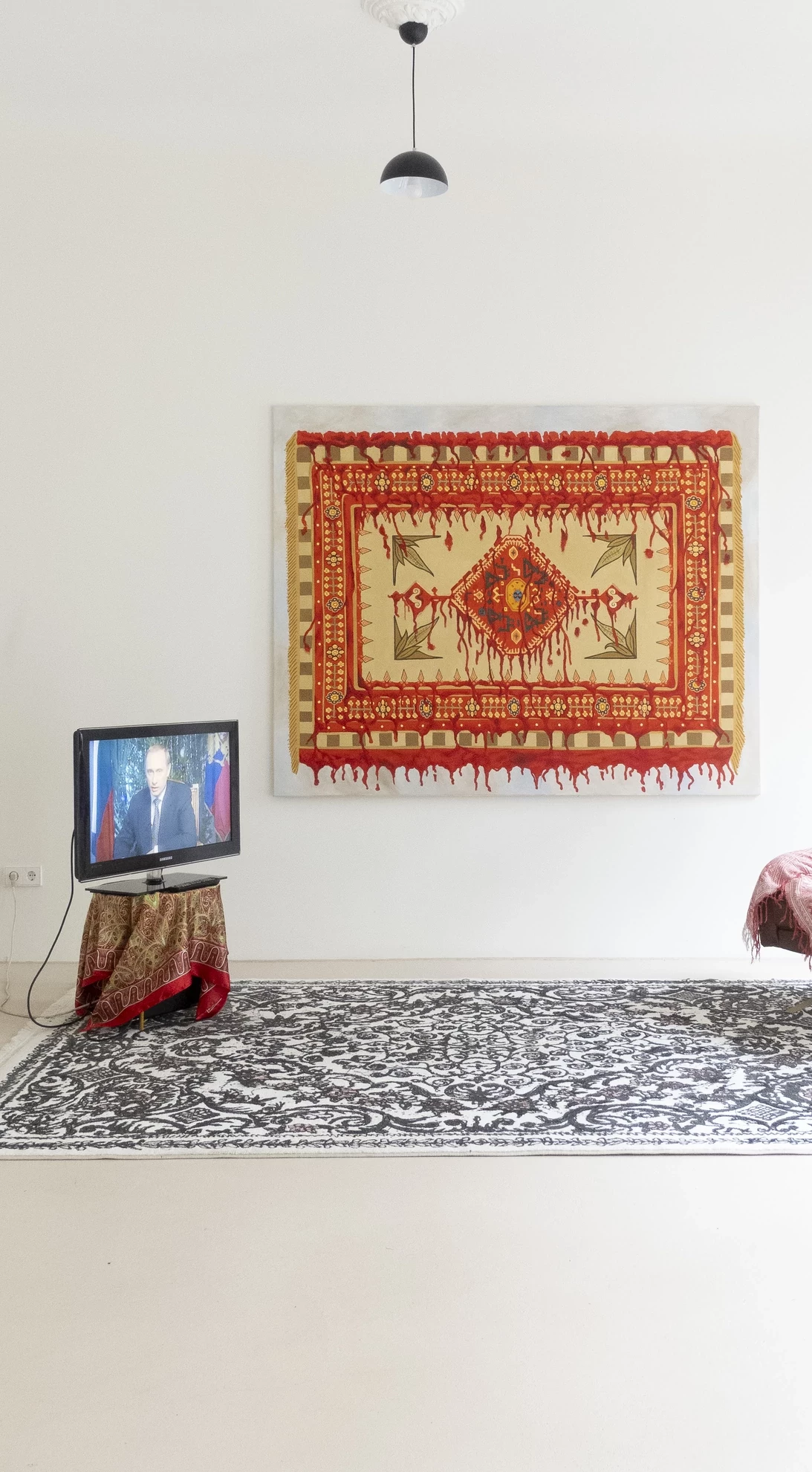
In authoritarian regimes, public space becomes increasingly restricted for critical thinkers. Spaces of freedom must be created independently and sometimes emerge in the most confined of settings: the private sphere. In the small Moscow kitchens of the 1970s or a GDR living room—with the fourth edition of “Jüdische Ossis,” the exhibition curated by Christina Kettering explores these connections and takes specific spaces as its starting point. In two walk-through installations by Simon Ostaschenko and Matthias Nebel, a Moscow kitchen and a GDR living room become spaces that visitors can explore. Accompanied by audio performances, visitors can immerse themselves individually in these living environments.
The exhibition explores the possibilities and limits of spaces of freedom under authoritarian regimes, the relationship between withdrawal and opposition, and also turns its gaze to the present: How are Russian dissidents dealing with Putin’s Russia in the wake of the attack on Ukraine?
Dates: September 22 to October 31, 2026
The exhibition is open to the public on all event days at the Festspielhaus, from one hour before the first event until one hour after the last event.
In collaboration with Institut für Neue Soziale Plastik

Jüdische Ossis IV
Spaces of freedom and retreat
22.09. – 31.10.2026